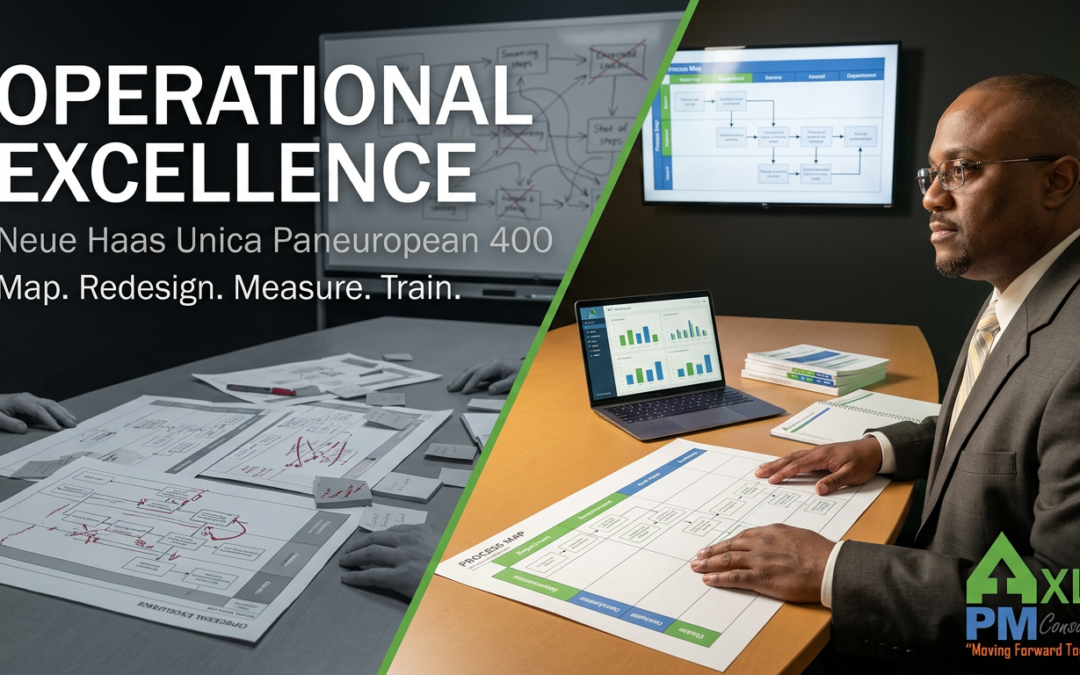
Messy workflows and unclear accountability drain your team’s energy and slow progress. You don’t need more effort—you need a system that exposes where work stalls and who owns what. With operational excellence services like process mapping, KPI development, and workflow redesign, you gain clear ownership and real-time visibility that drive faster results. Let’s explore how a structured approach turns bottlenecks into momentum for your organization. For more insights on operational excellence, consider this resource.
Operational Excellence Pathway
Beginning your journey toward operational excellence involves understanding your current processes. Mapping and redesigning these workflows can unlock efficiency and accountability.
Mapping the Current Process
Mapping your current process is the first step to unlocking operational excellence. This stage reveals hidden inefficiencies and roles that may not be clearly defined. During this phase, teams often uncover handoff gaps and duplicate steps that slow progress. By visualizing workflows, you gain a clear picture of where improvements are needed.
To effectively map processes, engage team members who perform the work daily. Their insights are invaluable for creating accurate maps that reflect real-world scenarios. Using tools and methodologies, such as Lean or Six Sigma, can further enhance this process. Ultimately, a well-mapped process sets the foundation for successful workflow redesign and improvement.
Redesigning Workflows for Clarity
Once you’ve mapped your current processes, the next step is redesigning them for clarity and efficiency. This involves streamlining steps and clarifying roles to eliminate bottlenecks. Simplifying complex workflows ensures that everyone knows their responsibilities.
A well-designed workflow not only improves speed but also enhances accountability. By reducing unnecessary steps, teams can focus on what truly matters. Consider utilizing operational excellence software to support this transformation. Ultimately, clarity in workflows leads to more effective operations and better results.
Measuring Success with KPIs
Key Performance Indicators (KPIs) are essential for measuring progress and success. They provide quantifiable evidence of how well your redesigned workflows are performing. Establishing the right KPIs involves selecting metrics that align with your organization’s goals.
KPIs offer a way to track improvements and identify areas needing further refinement. Regularly reviewing these indicators ensures that your team remains on track and that any issues are addressed promptly. For assistance in developing effective KPIs, explore resources on deploying metrics.
Building Accountability and Visibility
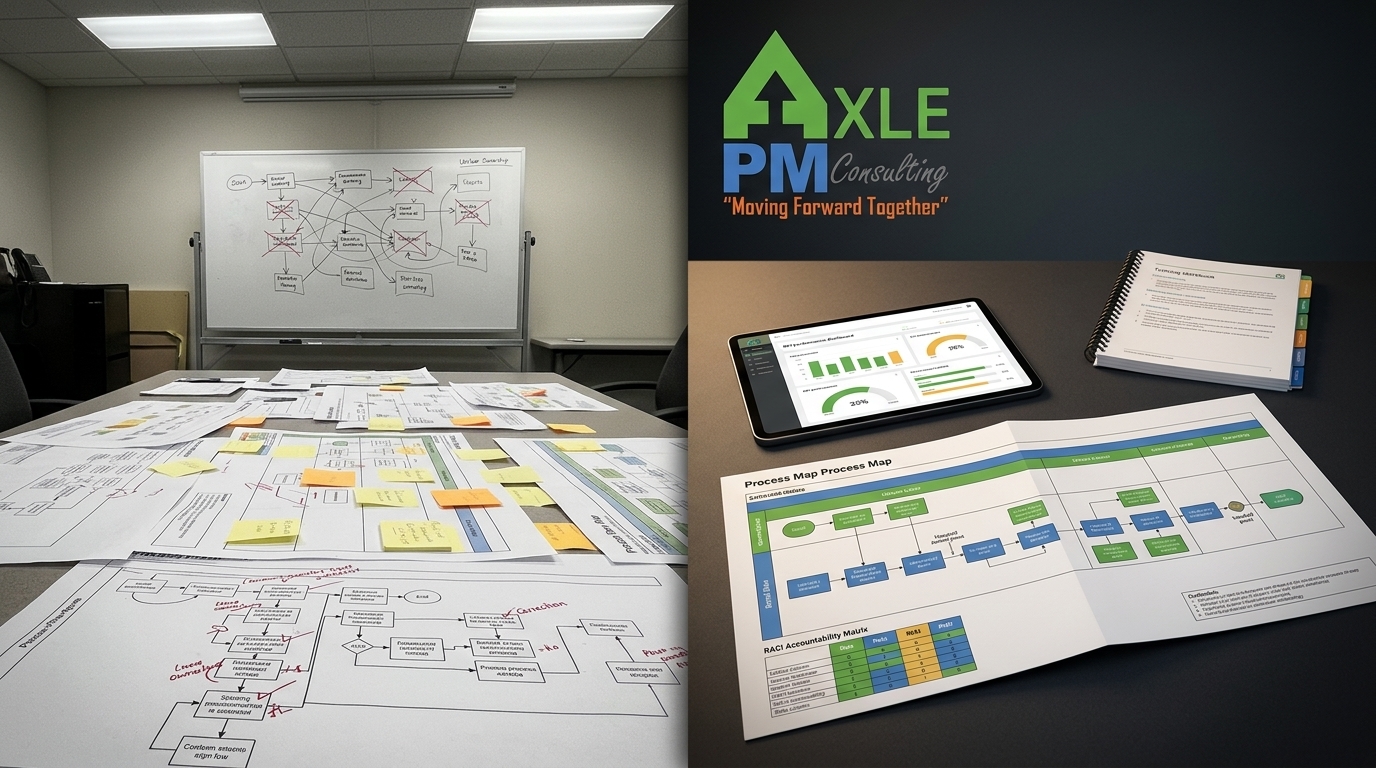
Enhancing accountability and visibility within your organization requires structured systems. Implementing models and dashboards can create a transparent environment.
Creating a RACI Model
Creating a RACI (Responsible, Accountable, Consulted, Informed) model provides clarity on roles and responsibilities. This tool ensures everyone knows their tasks and who to approach for guidance. It minimizes confusion and fosters a culture of accountability.
Implementing a RACI model involves identifying stakeholders and assigning roles for each task. By doing so, you promote clear communication and efficient task management. This model supports a structured approach to achieving goals and maintaining transparency.
Designing Performance Dashboards
Performance dashboards offer real-time insights into how well your organization is functioning. They display key metrics and data in an accessible format, allowing decision-makers to stay informed.
Designing effective dashboards involves selecting relevant data and presenting it clearly. A well-crafted dashboard enhances operational visibility, enabling proactive management. For guidance on designing performance dashboards, check out resources on this topic.
Embedding New Work Practices
Embedding new work practices involves integrating improved processes into your organization’s daily routines. This ensures that changes are sustainable and lead to long-term success. Training and support are crucial for this transition.
Encourage team members to adopt new practices by highlighting their benefits. Providing ongoing support and resources ensures that the changes are embraced and maintained. Over time, these practices become ingrained, enhancing overall efficiency.
Sustaining Operational Improvements
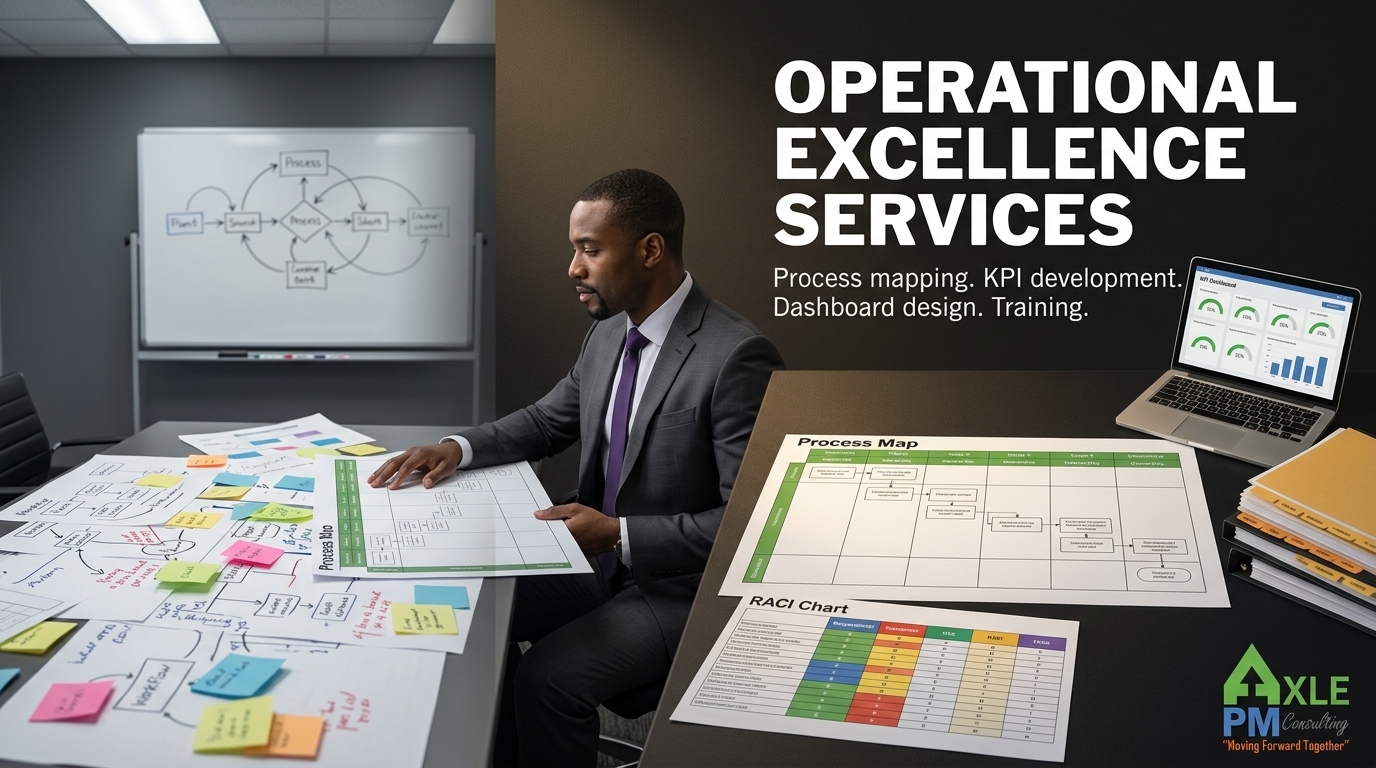
To sustain improvements, focus on ongoing support and leadership strategies that drive momentum.
Change Management Coaching
Change management coaching helps teams navigate transitions smoothly. It equips leaders with the skills needed to guide their teams through changes. Effective coaching ensures that everyone adapts to new systems and processes.
Providing change management coaching involves offering workshops and resources that build resilience and adaptability. This support fosters a culture of continuous improvement and readiness for future changes.
Virtual PMO Support for Momentum
Virtual Project Management Office (PMO) support offers the structure needed to maintain progress without the overhead of a physical office. This flexible approach provides expert guidance and centralized tracking.
By leveraging virtual PMO services, your organization benefits from expert project oversight without incurring additional costs. This approach ensures that projects remain aligned with strategic goals, promoting sustained momentum.
Cost-Smart Leadership in Action
Cost-smart leadership is about making wise decisions that maximize resources. Leaders who prioritize cost-effective strategies ensure that improvements are both impactful and sustainable.
Implementing cost-smart leadership involves focusing on initiatives that deliver the highest returns. By embracing this approach, leaders can drive significant improvements without wasting resources. This strategy supports long-term success and operational excellence.
By following these pathways, your organization can achieve operational excellence, clearer workflows, and stronger accountability. Embrace these strategies to unlock your team’s potential and drive meaningful results.