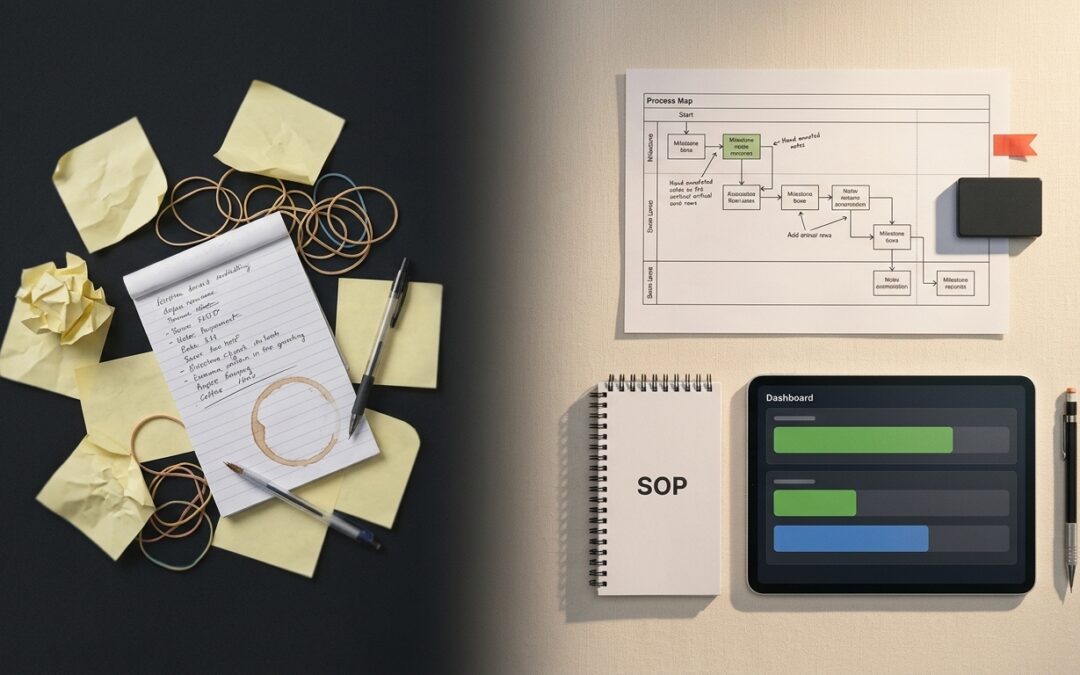
Ad hoc fixes might seem like quick solutions, but they often crumble when pressure mounts and budgets tighten. You don’t need more improvisation—you need operational excellence that delivers measurable control from day one. By replacing patchwork efforts with process mapping, a clear KPI system, live dashboards, and SOPs, you gain the visibility and discipline to keep projects on track and prove progress at every step. Let’s explore how structured operations turn uncertainty into steady, confident results.
Hidden Costs of Patchwork Operations
When teams rely on ad hoc fixes, they often find themselves caught in a cycle of temporary relief that leads to long-term challenges. Let’s explore why these quick solutions can end up being more costly than beneficial.
Short-term Relief, Long-term Frustration
At first, patchwork operations can seem like an easy way to solve immediate problems. You might find it gives a short burst of relief when a quick fix comes through. But the cracks start to show when these temporary solutions fall apart under pressure. The short-term ease often translates into long-term frustration, as the root problems remain unaddressed, leading to repeated issues and inefficiencies. This cycle wastes time and resources and can cause operational chaos. The real cost is not just financial; it’s the loss of trust and consistency in outcomes.
Most people think they can save time by cutting corners, but this often results in greater delays down the line. The constant need to revisit and rework solutions becomes a burden. Instead of moving forward, teams find themselves stuck in reactive mode, unable to progress. The longer you wait to implement structured processes, the deeper the challenges become.
Why Improvisation Fails Under Pressure
Improvisation might work well in a jam, but it rarely holds up under scrutiny. When the stakes are high, and budgets are tight, these makeshift solutions crumble. They lack the structure needed to withstand operational demands. In the absence of a solid framework, teams struggle with unclear directions, miscommunication, and missed deadlines. The chaos that follows often leads to further complications and missed opportunities.
People are## Hidden Costs of Patchwork Operations
Operational excellence isn’t just a buzzword; it’s a necessity. Many organizations rely on quick fixes, thinking they save time and money. This approach often leads to frustration and inefficiency over time.
Short-term Relief, Long-term Frustration
Initially, patchwork solutions seem to work. They’re fast and easy, but soon, the cracks begin to show. These temporary solutions can lead to increased costs and inefficiencies. When a system isn’t properly mapped out, overlapping tasks and miscommunications occur, causing delays and errors that could have been avoided with proper planning.
Such quick fixes often lack standardization, which means different team members might handle the same task differently. This inconsistency affects productivity and quality. Consider the confusion that arises when team members aren’t on the same page. This kind of breakdown is common and costly.
Why Improvisation Fails Under Pressure
Improvisation may work in the short term, but when the pressure is on, it often collapses. Without a solid foundation, teams struggle to adapt when unexpected challenges arise. A lack of clear KPIs and live dashboards means that leaders are flying blind, unable to make informed decisions quickly.
Imagine a project suddenly running into a roadblock. Without predefined processes and metrics, finding the cause and solution takes longer. This delay can lead to missed deadlines and lost opportunities. Most leaders need to see progress in real time to pivot strategies effectively.
Building an Accountability Engine
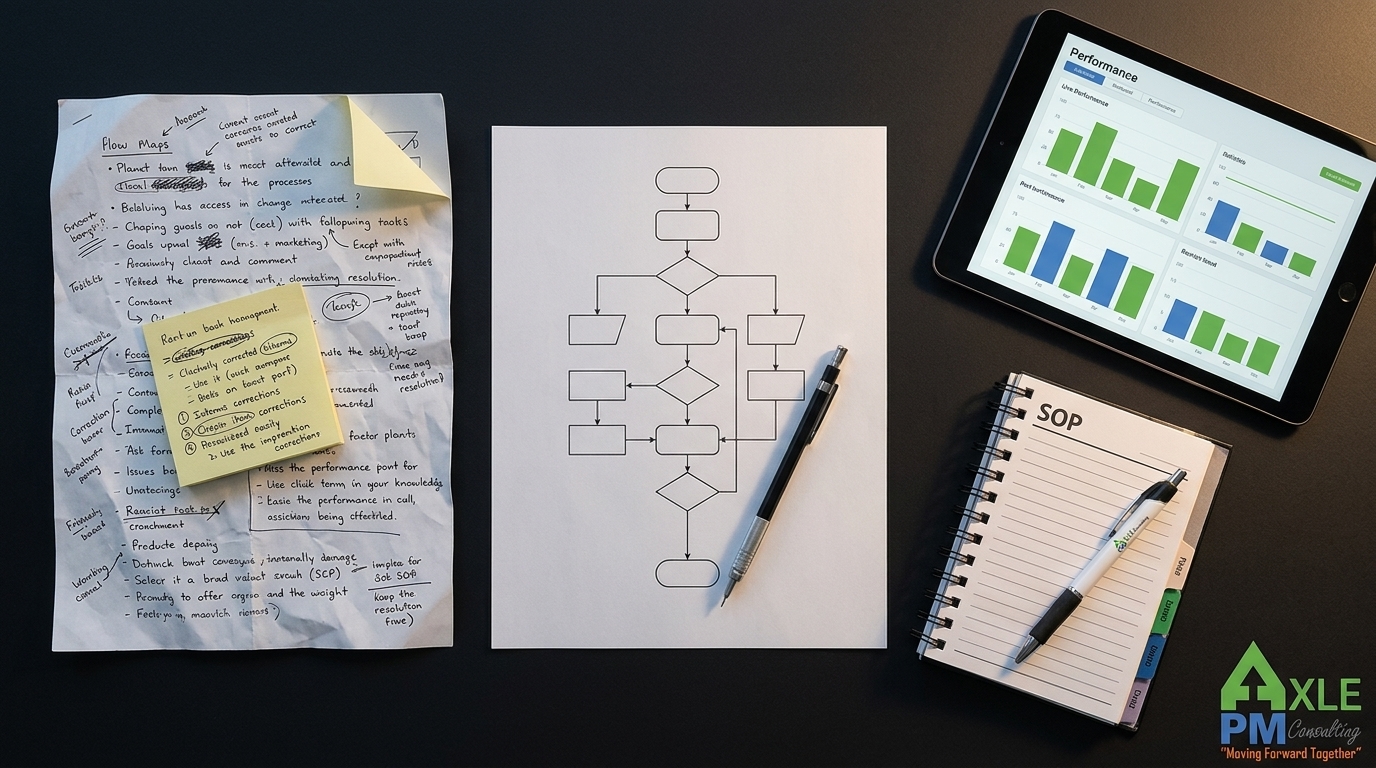
To avoid these pitfalls, building a comprehensive accountability engine is key. This includes process mapping, KPI systems, and live dashboards. These tools create a structured environment where everyone knows their role and how to measure success.
Process Mapping for Clarity
Process mapping clarifies every step of a task, ensuring that all team members understand their roles and responsibilities. A well-mapped process eliminates ambiguity and reduces the chance of errors.
Mapping out each process helps streamline operations by identifying redundant tasks and areas for improvement. It ensures that every team member follows the same protocol, enhancing consistency and reliability. By visualizing the workflow, teams can easily spot inefficiencies and make the necessary adjustments.
Check out this resource to learn more about mastering business process mapping.
KPI Systems for Measurable Outcomes
Key performance indicators are essential for tracking progress and ensuring that a project stays on course. By setting clear KPIs, you can measure success accurately and make necessary adjustments in real time.
Effective KPI systems highlight areas that require attention, allowing teams to focus their efforts where it matters most. When everyone is aware of the key metrics, accountability naturally follows. Regularly reviewing these indicators keeps everyone aligned with the project’s goals.
For more insights on KPIs, visit this blog.
Live Dashboards for Real-Time Visibility
Live dashboards provide up-to-date information at a glance. They allow leaders to see the status of various projects and make informed decisions quickly. The ability to track progress in real time is invaluable for maintaining control.
With a live dashboard, you can instantly identify bottlenecks and allocate resources efficiently. It enables a proactive rather than reactive approach to project management. This visibility ensures that projects remain on schedule and within budget.
Explore more about operational KPIs and performance dashboards in this playbook.
Operational Control from Day One
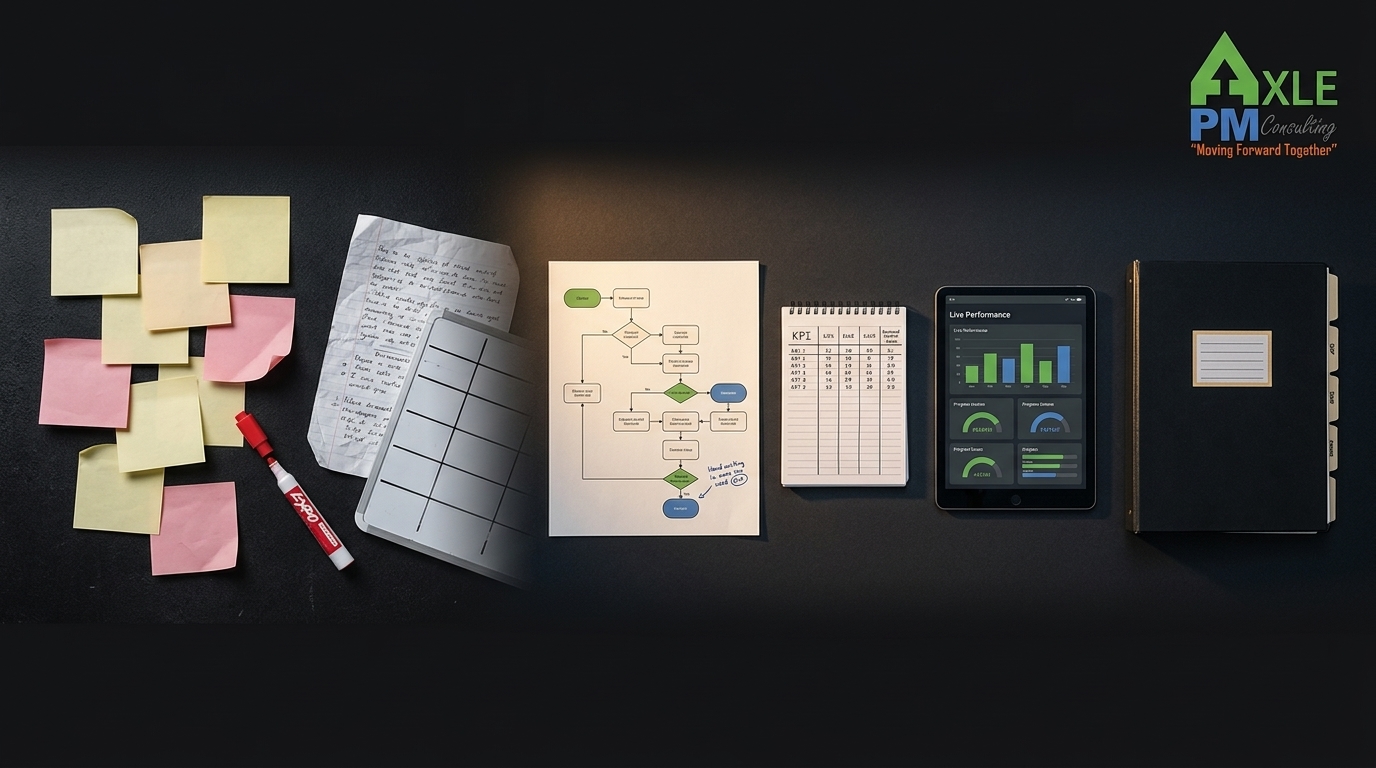
Implementing SOPs and robust project governance from the start ensures consistency and smooth operations. These elements play a crucial role in maintaining control and achieving desired outcomes.
Standard Operating Procedures (SOPs) for Consistency
Standard operating procedures are critical for maintaining quality and consistency. When SOPs are in place, team members know exactly what is expected of them at every stage. This uniformity is key to producing reliable results.
SOPs reduce errors by providing clear instructions for completing tasks. They also make onboarding new team members faster and more efficient. With established procedures, there’s less room for misunderstanding, leading to smoother operations.
Learn more about SOPs for operational excellence here.
Project Governance and Performance Management
Strong project governance ensures that all projects align with organizational goals. It involves setting clear roles, responsibilities, and performance metrics to track success.
Good governance fosters transparency and accountability. It helps in identifying potential risks early and developing strategies to mitigate them. With effective performance management, you can ensure that all team members contribute to the project’s success.
Virtual PMO Support for Seamless Change Management
Virtual PMO support offers flexible project management solutions without the overhead of a full-time staff. This approach allows for scalable support and expertise whenever needed.
A virtual PMO provides centralized tracking and documentation, ensuring that all project elements are accessible and organized. This support is invaluable during transitions, as it ensures continuity and stability.
Implementing these strategies gives teams the control they need to handle challenges effectively. By replacing ad hoc fixes with structured systems, organizations achieve operational excellence and measurable outcomes from day one.
Frequently Asked Questions
What is process mapping, and why is it important?
Process mapping is a visual representation of the steps involved in a process. It is crucial for identifying inefficiencies, reducing redundancies, and ensuring that everyone understands their role within a project.
How do KPI systems benefit organizations?
KPI systems provide measurable metrics that help track progress and identify areas needing attention. By setting clear KPIs, organizations can focus on achieving specific goals and enhance accountability.
What advantages do live dashboards offer to project management?
Live dashboards offer real-time visibility into project status, enabling quick decision-making and efficient resource allocation. They help in spotting bottlenecks early and keeping projects on track.
How do SOPs contribute to operational excellence?
SOPs standardize processes, ensuring consistency and reducing errors. They provide clear guidelines for tasks, making onboarding more efficient and maintaining quality across operations.
Why consider virtual PMO support?
Virtual PMO support offers scalable project management solutions without the cost of full-time staff. It provides centralized tracking and expertise, ensuring smooth transitions and continuous project visibility.