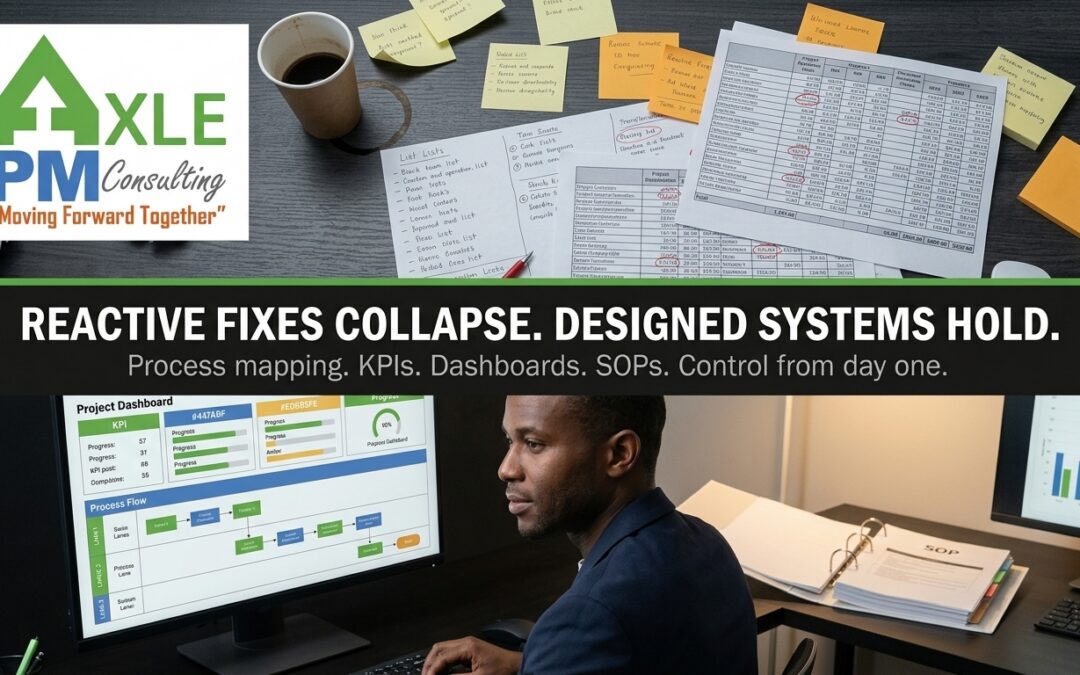
Ad hoc fixes drain your team’s time and trust, collapsing the moment pressure hits. You’ve felt it—the scramble when deadlines shift or staff gaps appear, exposing missing process maps, KPIs, and SOPs. Operational excellence means moving beyond quick patches to a connected system where process mapping, KPI systems, operational dashboards, and standard operating procedures keep your work visible and stable. Here’s how to build that control from day one.
Building Operational Excellence
Creating a robust operational framework is essential for any organization striving for reliability and success. The journey begins with understanding your processes and setting a solid foundation that supports performance tracking and visibility.
Process Mapping for Clarity
Process mapping is your first step towards operational clarity. By visually representing each step in your workflow, you identify inefficiencies and areas for improvement. This transparency helps teams understand their roles and responsibilities, reducing confusion and increasing productivity.
Start by documenting each process in detail. Use visual aids like flowcharts or diagrams to make these processes accessible to everyone involved. Keep the maps updated regularly to reflect any changes. This proactive approach ensures that your team is aligned and prepared to tackle any challenges that arise.
KPI Systems for Performance Metrics
Key Performance Indicators, or KPIs, are critical for measuring your organization’s success. They provide quantifiable metrics that help track progress and guide decision-making. Without these, it becomes difficult to determine if your strategies are effective.
Identify the most relevant KPIs for your business objectives. These could include sales targets, customer satisfaction scores, or production volumes. Set benchmarks and review these metrics consistently. This practice not only helps in maintaining accountability but also facilitates strategic adjustments when necessary.
Operational Dashboards for Visibility
Dashboards offer a real-time overview of your operations, providing crucial insights at a glance. They consolidate data from various sources into a single view, enabling quicker and more informed decisions.
When setting up operational dashboards, focus on clarity and relevance. Display only the most critical data points to avoid overwhelming the viewer. Regularly update and customize dashboards to align with evolving business needs. This dynamic tool keeps you informed and ready to adapt swiftly to changes.
Establishing Reliable Procedures
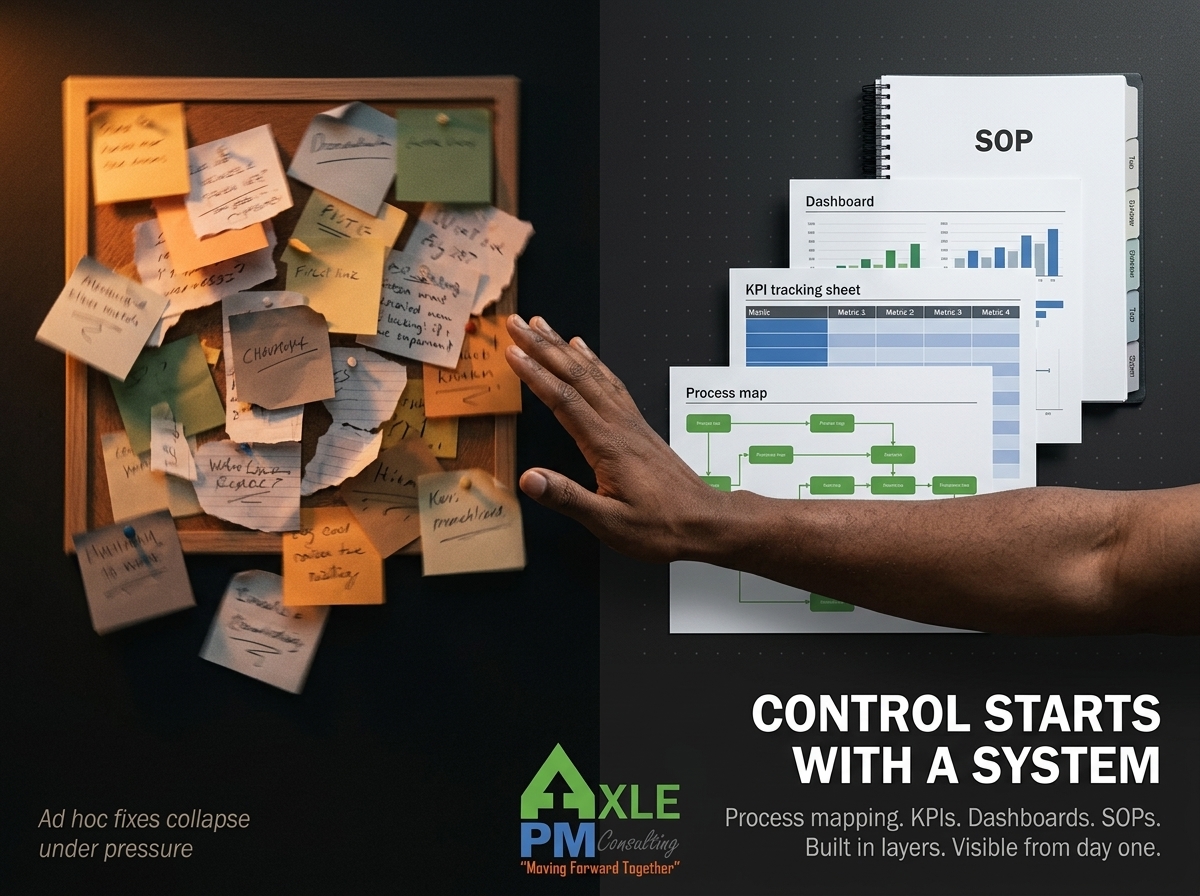
Now that you have clarity, metrics, and visibility, it’s time to translate these insights into action through established procedures and frameworks.
Creating Standard Operating Procedures
Standard Operating Procedures (SOPs) are detailed instructions that ensure consistency and quality in task execution. They are vital for maintaining high standards and minimizing errors across your operations.
Draft SOPs for all critical processes. Involve team members who perform these tasks to ensure accuracy and practicality. Regularly review and update these documents to incorporate best practices and lessons learned. SOPs serve as a reliable reference, fostering a culture of consistency and excellence.
Connecting SOPs to Execution Discipline
For SOPs to be effective, they must be integrated seamlessly into daily operations. This requires a disciplined approach where adherence to these procedures becomes second nature for your team.
Encourage an environment where following SOPs is prioritized. Provide training sessions to reinforce their importance and address any challenges in implementation. This practice instills a sense of discipline, ensuring that procedures are followed diligently and consistently.
Ensuring Accountability Frameworks
Accountability frameworks are essential for fostering responsibility and ownership within your team. They clearly define who is responsible for each task and the expected outcomes, promoting transparency and reliability.
Establish clear roles and responsibilities for every team member. Use tools like project management software to assign tasks and monitor progress. Regular feedback sessions help in addressing any issues and recognizing achievements. This framework builds a strong foundation for accountability and continuous improvement.
Achieving Lasting Control
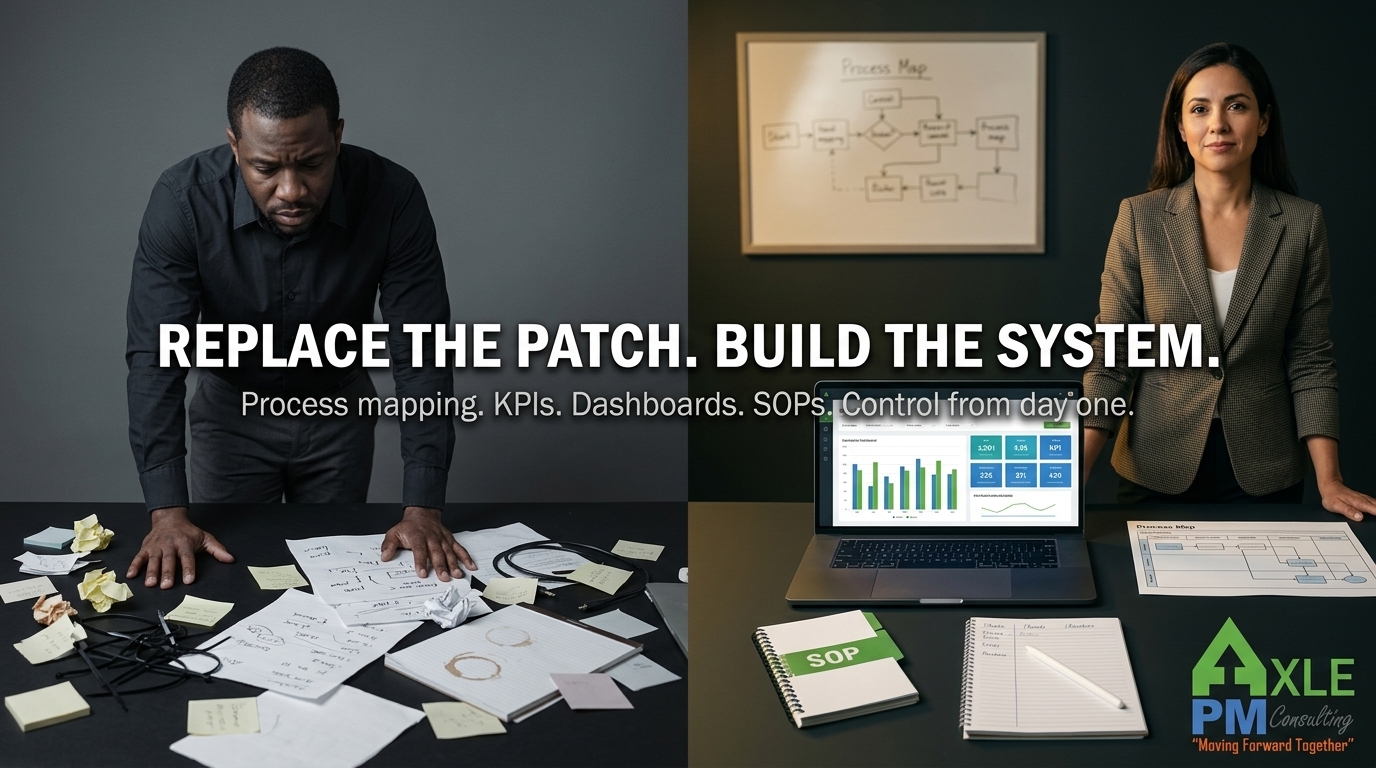
With a comprehensive system in place, the focus shifts to maintaining consistency and driving improvements for sustained success.
From Ad Hoc Fixes to Consistency
Consistency is key to operational excellence. Moving away from ad hoc fixes to a structured approach ensures that your organization is resilient and adaptable.
Assess and refine your processes continuously. Use the insights from your KPI systems and dashboards to identify areas for consistency improvement. This iterative process helps eliminate quick fixes, establishing a stable and reliable operational environment.
Agile Project Management and Continuous Improvement
Agile project management provides the flexibility needed to adapt to changing conditions while promoting continuous improvement. It fosters a proactive approach, enabling teams to respond swiftly to challenges.
Implement Agile methodologies to encourage collaboration and iterative progress. Regularly review project outcomes and incorporate feedback for future enhancements. This approach not only boosts efficiency but also drives innovation and growth.
Consultation for Small Business and Nonprofit Operations
Small businesses and nonprofits face unique challenges that require tailored solutions. Consulting services provide the expertise needed to navigate these complexities effectively.
Consider partnering with a consulting firm that specializes in operational excellence. They can offer insights and strategies that align with your specific needs, helping you achieve your goals with confidence and clarity.
Frequently Asked Questions
What is process mapping and why is it important?
Process mapping visually represents each step in a workflow, helping to identify inefficiencies and improve clarity. It ensures that everyone involved understands their roles and can contribute effectively to the process.
How do KPIs benefit an organization?
KPIs provide quantifiable metrics that track progress towards business objectives. They guide decision-making and help maintain accountability, ensuring that strategies are effective and aligned with goals.
What is the role of operational dashboards?
Operational dashboards offer a real-time overview of data, enabling quicker and more informed decisions. They consolidate information from various sources, providing critical insights at a glance.
Why are SOPs essential for businesses?
SOPs ensure consistency and quality in task execution by providing detailed instructions. They minimize errors and maintain high standards across operations, fostering a culture of excellence.
How can consulting services aid small businesses and nonprofits?
Consulting services offer tailored solutions and expertise to navigate complex challenges. They provide strategies that align with specific needs, helping organizations achieve their goals with clarity and confidence.