
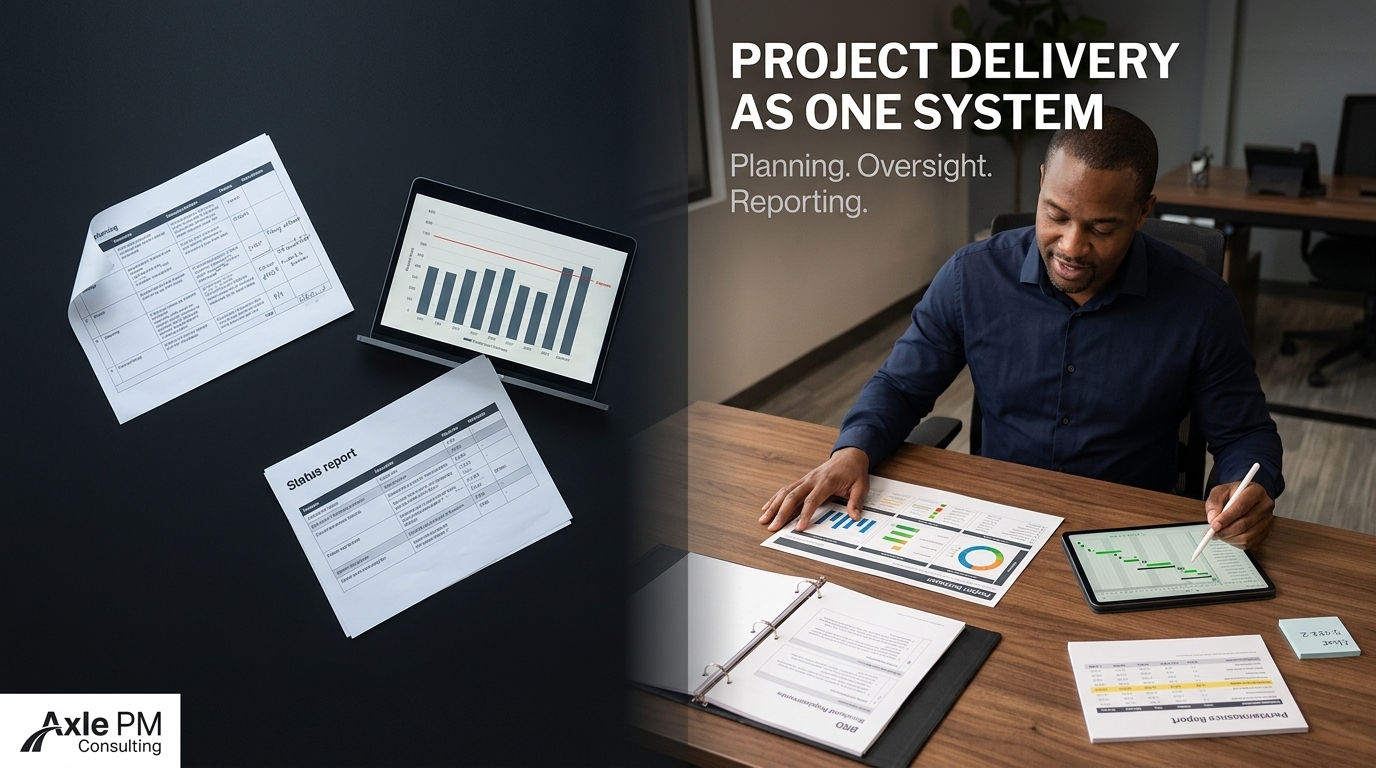
Projects often slip off schedule because planning, oversight, and reporting live in separate silos. When reports only show what’s already gone wrong, fixing the budget or timeline feels impossible. Integrating these functions into one project operating rhythm gives you clear, real-time control over deliverables, costs, and deadlines. Keep reading to see how Axle PM Consulting’s approach turns scattered data into a single source of truth that protects your business outcomes. For more insights on the benefits of integrated project management, you can explore this resource.
Integrated Project Management System
Connecting Planning, Oversight, Reporting
Imagine having all your project management tools in one place. This connection makes it easier for you to track progress and make informed decisions. Instead of juggling different systems for planning, oversight, and reporting, you bring them together into one cohesive unit. This approach simplifies your workload and saves time. When these elements work as a team, you see problems before they grow.
Benefits of Unified Project Rhythm
With a unified project rhythm, you gain control over your schedule and budget. Projects run smoothly when everyone knows what’s expected. This rhythm means fewer surprises and more predictability. When teams share a common goal and follow the same plan, work becomes more efficient. You can achieve more without the stress of constant adjustments. For a deeper dive into integrated project delivery and its advantages, check out this article.
Overcoming Fragmented Processes
Fragmented processes often lead to confusion and errors. When tasks are scattered, it’s easy to lose track of priorities. By aligning planning, oversight, and reporting, you streamline workflows and enhance productivity. This alignment clarifies responsibilities and fosters collaboration. It creates a clear path to follow, reducing the risk of delays and miscommunication. For further insights on integrated project delivery, refer to this guide.
Achieving Schedule and Budget Control
Real-time Executive Dashboards
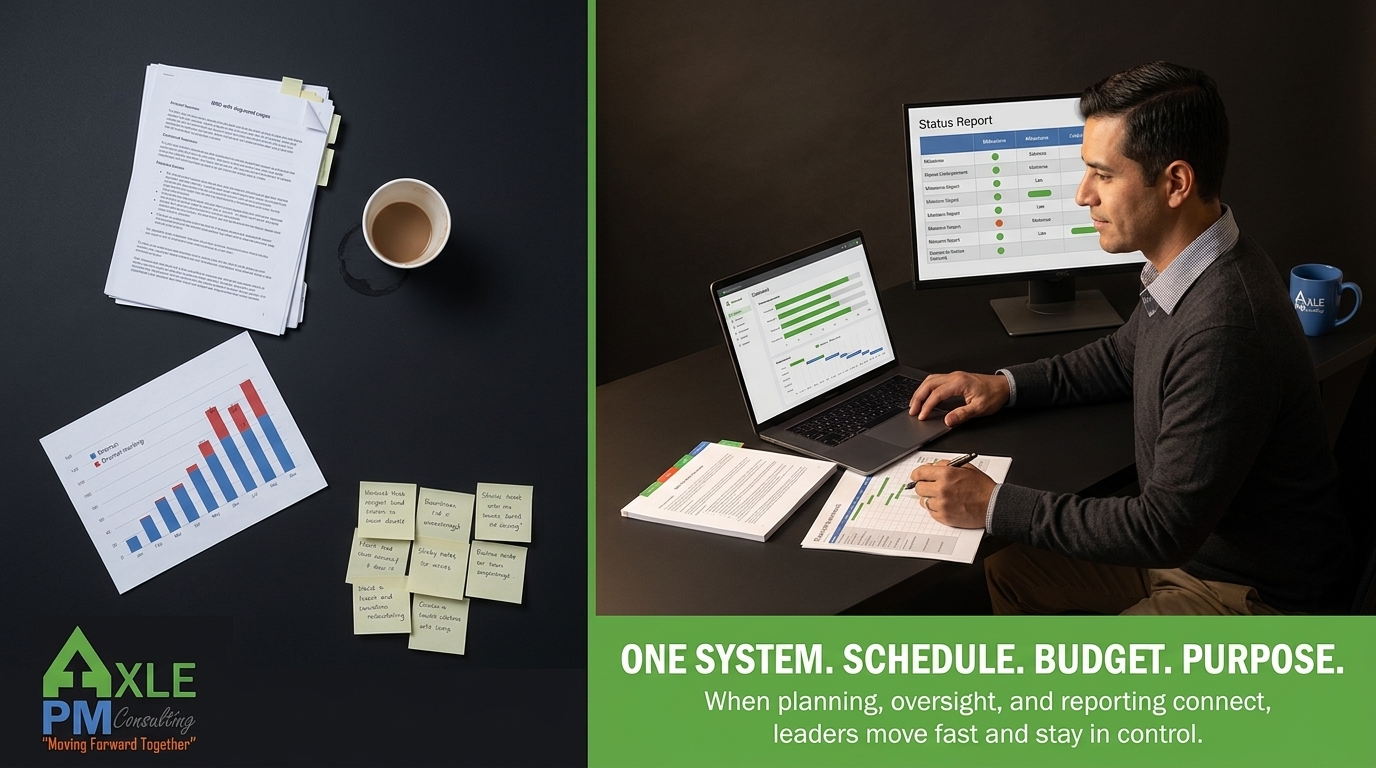
Real-time executive dashboards provide instant insights into your project’s status. These dashboards offer a bird’s-eye view so you can see the big picture at a glance. With this tool, you track progress, monitor budgets, and adjust plans as needed. This transparency allows you to make quick and informed decisions, ensuring your project stays on track. When everyone is on the same page, you prevent small issues from becoming major setbacks.
The Role of BRDs and Roadmaps
Business Requirements Documents (BRDs) and roadmaps serve as your project’s blueprint. They outline goals, timelines, and responsibilities, ensuring everyone knows their role. By defining requirements and mapping out the journey, you avoid missteps and align efforts with your objectives. These tools keep your team focused and motivated, reducing the risk of scope creep. They are essential for maintaining clarity and control.
Effective Risk and Issue Management
Managing risks and issues effectively protects your project from unforeseen problems. By identifying potential threats early, you can develop contingency plans and mitigate impacts. This proactive approach minimizes disruptions and keeps your project moving forward. Regular reviews and updates ensure that risks are managed and issues are resolved promptly. With the right strategies in place, you can navigate challenges with confidence.
Delivering Purposeful Outcomes
Ensuring Stakeholder Visibility
Stakeholder visibility is crucial for project success. Keeping stakeholders informed fosters trust and collaboration. Regular updates and transparent communication help ensure everyone is aligned with the project’s goals. By engaging stakeholders, you gain valuable insights and support. This involvement encourages a sense of ownership and commitment, leading to more successful outcomes.
Aligning Deliverables to Business Goals
Aligning deliverables with business goals ensures that your project contributes to your organization’s objectives. Clear alignment keeps the focus on what matters most, preventing resources from being wasted on irrelevant tasks. By regularly reviewing goals and deliverables, you ensure that every effort supports your mission. This alignment maximizes the impact of your work and drives meaningful results.
Leveraging PMO Services for Success
Project Management Office (PMO) services provide the structure and support needed for success. These services offer expertise, tools, and resources to guide your project from start to finish. By leveraging PMO services, you benefit from proven methodologies and best practices. This support enhances your ability to manage complex projects and achieve desired outcomes. PMO services are a valuable asset for maintaining control and efficiency.
Frequently Asked Questions
What is integrated project management?
Integrated project management combines planning, oversight, and reporting into one cohesive system. This approach streamlines processes, enhances collaboration, and provides real-time insights, ensuring projects run smoothly and efficiently.
How do executive dashboards help in project management?
Executive dashboards provide a visual overview of project status, allowing for quick decision-making. They display key metrics, track progress, and highlight areas needing attention, ensuring that projects stay on schedule and within budget.
Why are BRDs and roadmaps important in project management?
BRDs and roadmaps outline project goals, timelines, and responsibilities. They serve as a blueprint, keeping the team aligned and focused. This clarity helps prevent missteps and ensures that efforts are directed toward achieving business objectives.
How does effective risk management contribute to project success?
Effective risk management identifies potential threats early, allowing for proactive response plans. This approach minimizes disruptions and ensures that projects continue smoothly, even when challenges arise.
What role do PMO services play in project success?
PMO services provide expert guidance, tools, and resources to support project execution. They offer proven methodologies and best practices, enhancing the ability to manage complex projects and achieve successful outcomes.