
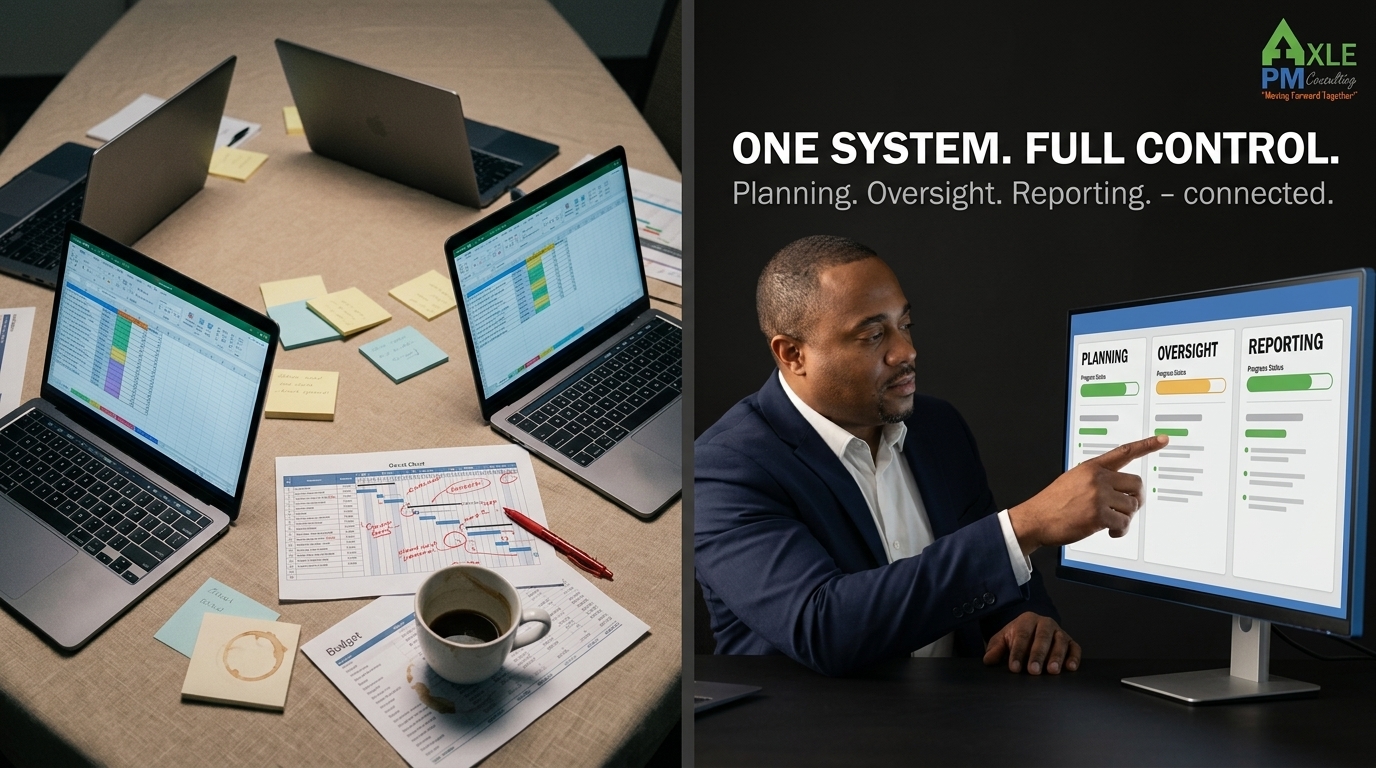
Project delays often start quietly—plans scattered, oversight disconnected, and reports arriving too late to steer the ship. When these pieces don’t work as one, your project risks slipping off track without clear warning. At Axle PM Consulting, we unify planning, oversight, and reporting into a single operating rhythm. This approach gives you early alerts, sharp accountability, and the control needed to keep your project on time, on budget, and aligned to purpose—even during the Summer Lull. For more insights, explore the benefits of an integrated project management solution.
Unified Project Management System
There’s a crucial difference between having a plan and executing it effectively. When planning, oversight, and reporting aren’t connected, projects often drift off course. Let’s explore how fragmented control impacts progress and how integrating these elements can restore order.
The Impact of Fragmented Control
Fragmented control can quietly derail a project. When planning, oversight, and reporting occur in separate silos, accountability vanishes, making it difficult to detect issues early. Without a unified system, crucial updates may filter through too late to prompt corrective action.
In practice, fragmented systems lead to miscommunication and delays. For example, when a project manager receives a report late, they may miss opportunities to address budget overruns or timeline shifts promptly. This disconnection results in unexpected surprises that can escalate quickly.
Leaders often find themselves firefighting rather than steering projects toward their strategic goals. Without cohesive project control, it becomes challenging to maintain momentum and ensure that projects remain on track. The key is integrating planning, oversight, and reporting into a seamless process.
Benefits of Integrated Planning and Reporting
Integrating planning and reporting creates a unified project management system where information flows smoothly. This integration empowers leaders with real-time insights, allowing for swift, informed decision-making. With early visibility into project health, it becomes easier to anticipate and mitigate risks.
For instance, consider a project team that holds regular status meetings with clear agendas and shared reports. This practice keeps everyone aligned and accountable, fostering a proactive approach to addressing potential challenges. By having a central platform for all project data, teams can avoid miscommunications caused by siloed information.
Ultimately, integrated planning and reporting lead to projects that are more likely to stay on schedule and within budget. This cohesive approach instills confidence in leaders, knowing they can rely on timely and accurate updates to guide their decisions. For further exploration, see how end-to-end digitalized project management can benefit your team.
Enhancing Project Oversight
Effective oversight is essential for project success, and it starts with risk detection and a comprehensive view of progress. Let’s delve into strategies for early risk detection and the pivotal role of executive dashboards in maintaining project control.
Early Risk Detection Strategies
Detecting risks early can save a project from derailment. By identifying potential issues before they escalate, teams can implement solutions that keep progress on track. Regular risk assessments and stakeholder communication are vital components of this strategy.
Imagine a scenario where a project team conducts weekly risk reviews. This proactive approach enables them to spot potential bottlenecks and address them before they impact deadlines or budgets. By maintaining open lines of communication, teams can ensure everyone is aware of possible challenges and prepared to act.
Another effective strategy is creating contingency plans for high-risk areas. By anticipating what might go wrong, teams can devise solutions in advance, reducing the likelihood of significant disruptions. For insights into the benefits of project management software, visit this resource.
The Role of Executive Dashboards
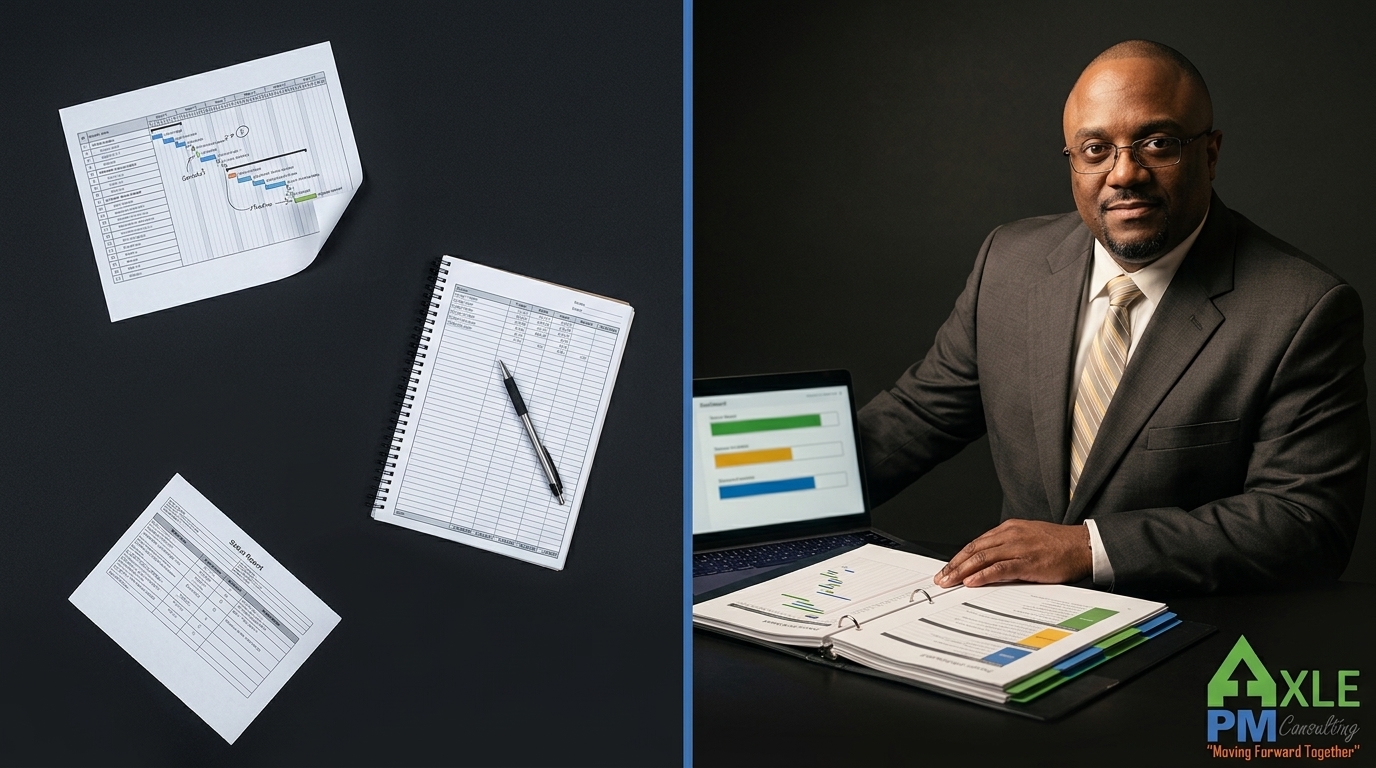
Executive dashboards provide a centralized view of project progress, offering leaders the insights needed to make informed decisions. These dashboards consolidate data into an easily digestible format, highlighting key performance indicators and potential areas of concern.
With an executive dashboard, leaders can quickly assess whether a project is on track, identify any variances from the plan, and drill down into specific issues. This real-time visibility means that decision-makers can act swiftly to address problems, rather than waiting for periodic reports.
Dashboards also facilitate communication by providing a consistent reference point for all stakeholders. By ensuring everyone has access to the same information, misunderstandings are minimized, and alignment is maintained. To learn more about the benefits of project management, explore this article.
Maintaining Project Momentum
Keeping projects moving forward requires a strategic approach, especially during periods like the Summer Lull. Maintaining a single operating rhythm is key to overcoming challenges and ensuring consistent progress.
Importance of a Single Operating Rhythm
A single operating rhythm unifies all project activities under a consistent cadence, ensuring that nothing falls through the cracks. This approach keeps teams synchronized and projects aligned with strategic objectives. Regular check-ins, status updates, and milestone reviews are essential components of this rhythm.
By establishing a regular cadence, teams can anticipate upcoming tasks and allocate resources effectively. This predictability minimizes disruptions and helps maintain a steady momentum. It fosters accountability by making progress visible and measurable, keeping everyone focused on common goals.
Moreover, a single operating rhythm reduces the complexity of managing multiple project elements, freeing up leaders to focus on strategic oversight rather than micromanagement. This streamlined approach results in greater efficiency and effectiveness.
Overcoming the Summer Lull Challenges
The Summer Lull presents unique challenges, as many team members may be on vacation or focused on other priorities. However, with a robust project management system, it’s possible to maintain momentum even during this period.
One strategy is to plan for the lull in advance, identifying critical tasks and ensuring they have the necessary resources and oversight. By anticipating potential slowdowns, teams can prepare accordingly and minimize their impact.
Another approach is to leverage technology to maintain connectivity and communication among team members, regardless of their location. This ensures everyone remains informed and engaged, reducing the risk of miscommunication and delays.
By applying these strategies, projects can continue progressing smoothly through the Summer Lull, keeping timelines and budgets intact. Explore more about integrated project management software here.
Frequently Asked Questions
1. What is a unified project management system?
A unified project management system integrates planning, oversight, and reporting into a cohesive process, ensuring all project elements work together seamlessly. This approach enhances accountability, early risk detection, and timely decision-making.
2. How can executive dashboards improve project oversight?
Executive dashboards provide a centralized view of project progress, consolidating data into an easily digestible format. They allow leaders to make informed decisions quickly by highlighting key performance indicators and potential issues.
3. Why is maintaining a single operating rhythm important?
Maintaining a single operating rhythm ensures consistency across all project activities, keeping teams synchronized and aligned with strategic objectives. It minimizes disruptions, fosters accountability, and enhances overall project efficiency.
4. How can I prepare my project for the Summer Lull?
Preparing for the Summer Lull involves planning critical tasks and ensuring they have the necessary resources and oversight. Leveraging technology to maintain connectivity and communication can also help keep projects on track during this period.
5. What are the benefits of integrated planning and reporting?
Integrated planning and reporting provide real-time insights, allowing for swift, informed decision-making. This approach reduces the likelihood of miscommunications and ensures projects stay on schedule, within budget, and aligned with strategic goals.