
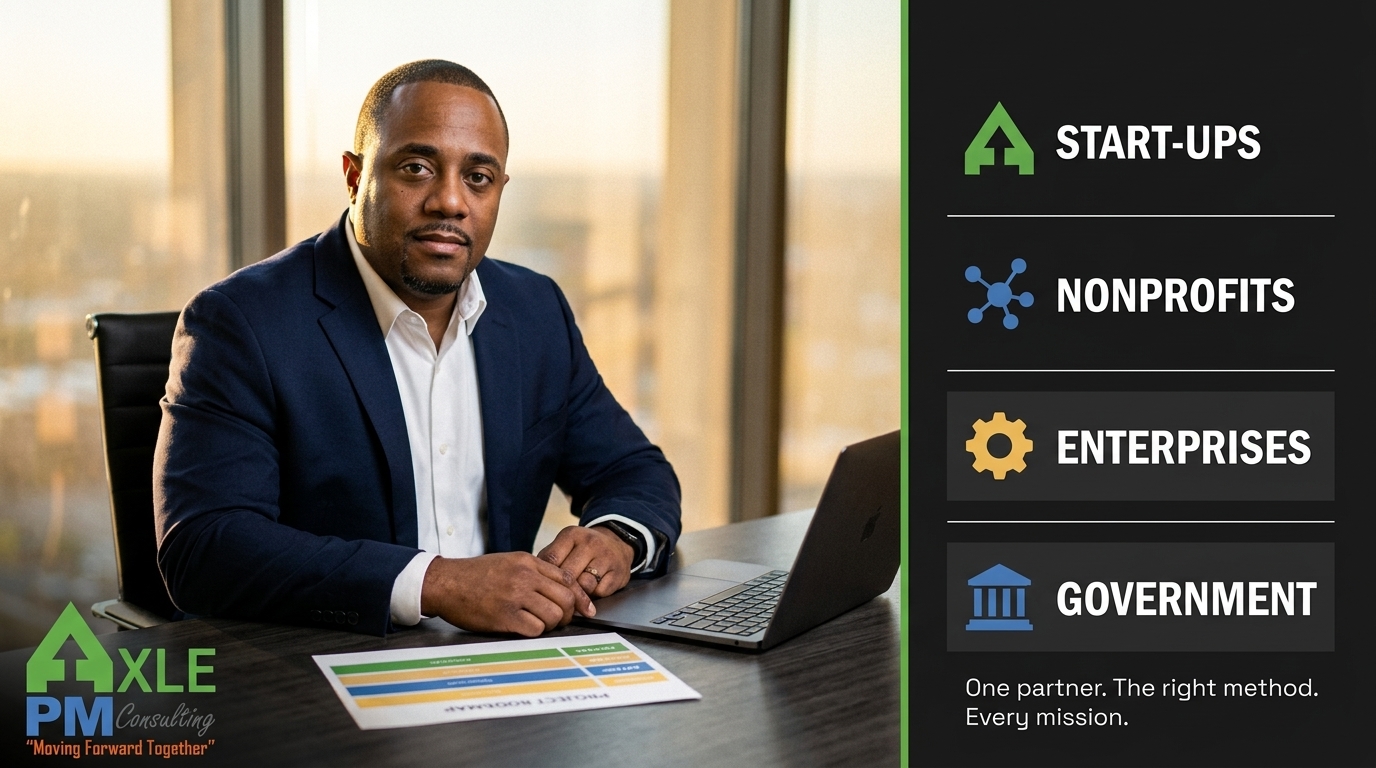
Start-ups, nonprofits, enterprises, and government teams do not thrive under the same project management approach. Each demands a unique balance of agility, structure, and oversight to keep initiatives moving forward. Knowing when to apply agile project management, traditional methods, or virtual PMO support creates the clarity and accountability your team needs to deliver strong results. This post will show how tailored project management consulting can turn your vision into steady progress without added complexity.
Tailored Project Management Approaches
Understanding different organizational needs is crucial for successful project management. Here, we dive into specific approaches for start-ups, nonprofits, and enterprises.
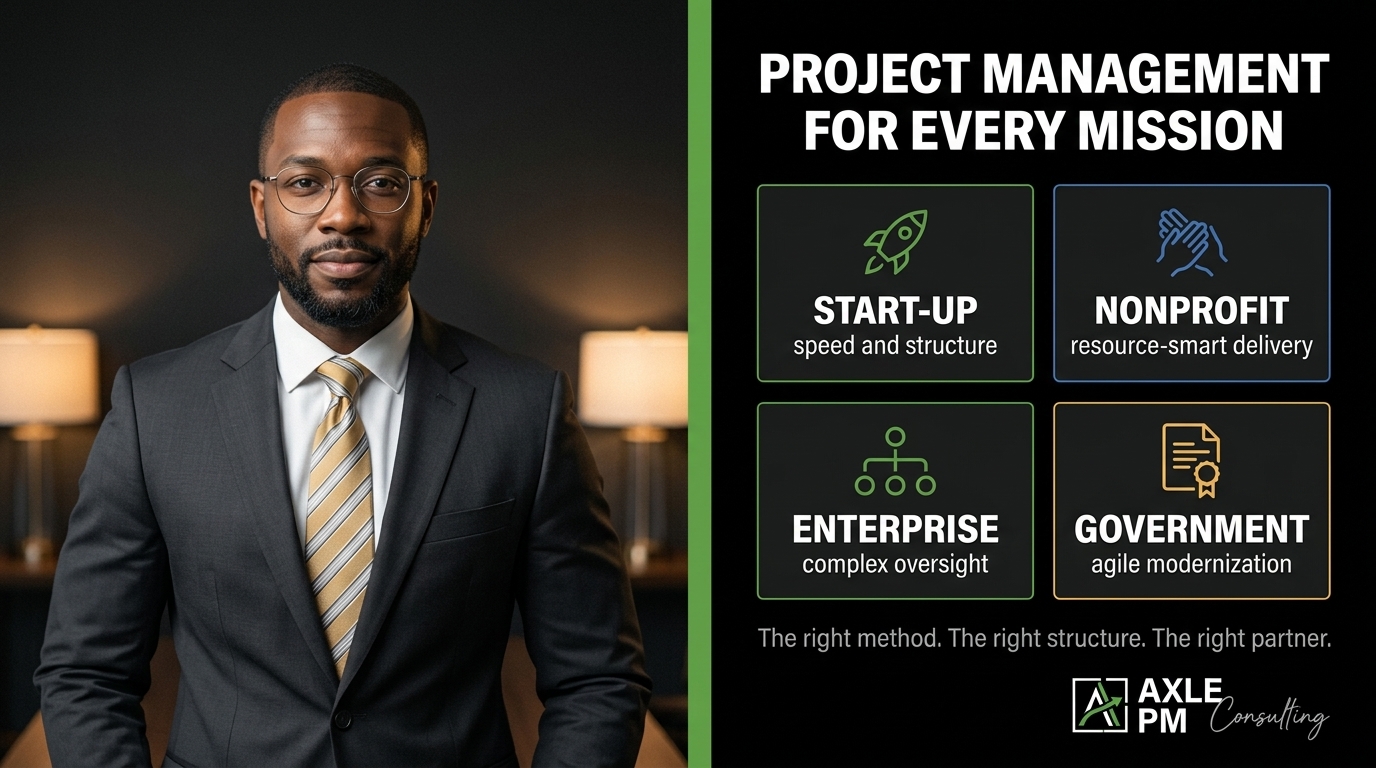
Start-Up Speed and Agility
Start-ups need to move fast. Agility is key. Your team can pivot quickly to seize new opportunities. This requires flexible project management that supports rapid changes. The focus here is on short sprints, frequent feedback, and quick adjustments. By adopting agile project management, start-ups can maintain momentum without losing sight of their goals.
For start-ups, it’s not just about speed; it’s about smart speed. This means having the right structure to support innovation. Leaders should prioritize tasks that deliver immediate value. This approach helps in making informed decisions and avoiding unnecessary work. Using agile methodologies can keep your start-up adaptable and competitive.
Nonprofit Resource Constraints
Nonprofits often operate with limited resources. Effective project management is about maximizing what you have. A clear plan helps in utilizing time, money, and manpower efficiently. Nonprofits can benefit from a structured approach that focuses on priority tasks and clear outcomes.
With limited budgets, nonprofits must ensure that every project aligns with their mission. The right project management strategy can help in maintaining transparency and accountability. This ensures that stakeholders are engaged and resources are used wisely. Structured planning and regular updates keep everyone on the same page, ensuring that projects are completed successfully.
Enterprise Complexity Management
Enterprises face unique challenges. Managing complexity is crucial. With multiple departments and stakeholders, clear communication and coordination are essential. Enterprises benefit from project management that offers both strategic oversight and detailed execution.
In large organizations, it’s important to align projects with business objectives. This requires careful planning and resource allocation. Enterprises need robust systems for tracking progress and managing risks. By adopting a comprehensive project management approach, enterprises can improve efficiency and achieve their strategic goals.
Navigating Project Leadership Models
Choosing the right project leadership model is vital for success. Let’s explore agile, traditional, and hybrid approaches.
Agile Project Management Essentials
Agile project management is about flexibility and responsiveness. It allows you to adapt to changes and deliver value quickly. This approach is ideal for projects with evolving requirements. It focuses on collaboration, customer feedback, and small, incremental improvements.
For teams looking to enhance their agility, adopting agile practices can lead to better outcomes. Agile methods encourage continuous improvement and foster a culture of innovation. By embracing this model, teams can ensure that their projects remain aligned with customer needs and market trends.
Traditional Project Management Controls
Traditional project management offers structure and predictability. It’s effective for projects with well-defined goals and timelines. This approach emphasizes planning, documentation, and risk management. It provides a clear framework for managing resources and tracking progress.
For projects that need strong oversight, traditional methods are invaluable. They offer a systematic way to manage scope, budget, and timelines. This ensures that projects are executed efficiently and stakeholders are kept informed. By maintaining control through structured processes, teams can deliver projects on time and within budget.
The Hybrid Delivery Model
The hybrid delivery model combines the strengths of agile and traditional approaches. It offers the flexibility of agile with the structure of traditional methods. This model is ideal for organizations that need adaptability without sacrificing control.
With a hybrid model, teams can tailor their approach to suit project needs. It allows for agile experimentation within a traditional framework. This ensures that projects remain responsive to change while staying aligned with strategic objectives. By integrating both methodologies, organizations can achieve a balance between innovation and reliability.
Tools for Effective Project Oversight
Implementing the right tools enhances project oversight. Here, we discuss virtual PMO, business analysis, and reporting tools.
Virtual PMO Advantages
Virtual PMO offers remote project management support. It’s cost-effective and flexible, providing expert guidance without full-time staffing. This solution is ideal for organizations needing project oversight without the overhead of an in-house PMO.
A virtual PMO can centralize tracking and documentation, ensuring consistency across projects. It offers access to experienced project managers who can provide strategic direction and operational support. By leveraging virtual PMO services, organizations can enhance their project management capabilities without significant investment.
Business Analysis Services and Impact
Business analysis services translate goals into actionable plans. They involve requirements gathering, process evaluation, and root cause analysis. This helps in aligning projects with business objectives and ensuring successful outcomes.
Effective business analysis leads to better decision-making. It supports process improvements and identifies opportunities for efficiency. By investing in business analysis, organizations can ensure that their projects deliver real value and drive strategic growth.
Project Dashboards and Reporting
Project dashboards and reporting tools provide visibility into project performance. They offer real-time data and insights, enabling informed decision-making. These tools are essential for tracking progress and measuring success.
Dashboards allow you to monitor key metrics and identify potential issues early. They provide a comprehensive view of project status and facilitate communication with stakeholders. By using reporting tools, organizations can ensure transparency and accountability throughout the project lifecycle.
Frequently Asked Questions
What is agile project management?
Agile project management is a flexible approach that emphasizes adaptability, collaboration, and quick delivery. It focuses on iterative processes and customer feedback to drive continuous improvement.
How does a virtual PMO benefit organizations?
A virtual PMO provides remote project management support, offering expert guidance and centralized tracking without the costs of a full-time in-house team. It ensures consistent project oversight and documentation.
Why is business analysis important in project management?
Business analysis is crucial as it translates business goals into actionable plans. It involves evaluating processes, gathering requirements, and identifying areas for improvement, ensuring projects align with strategic objectives.