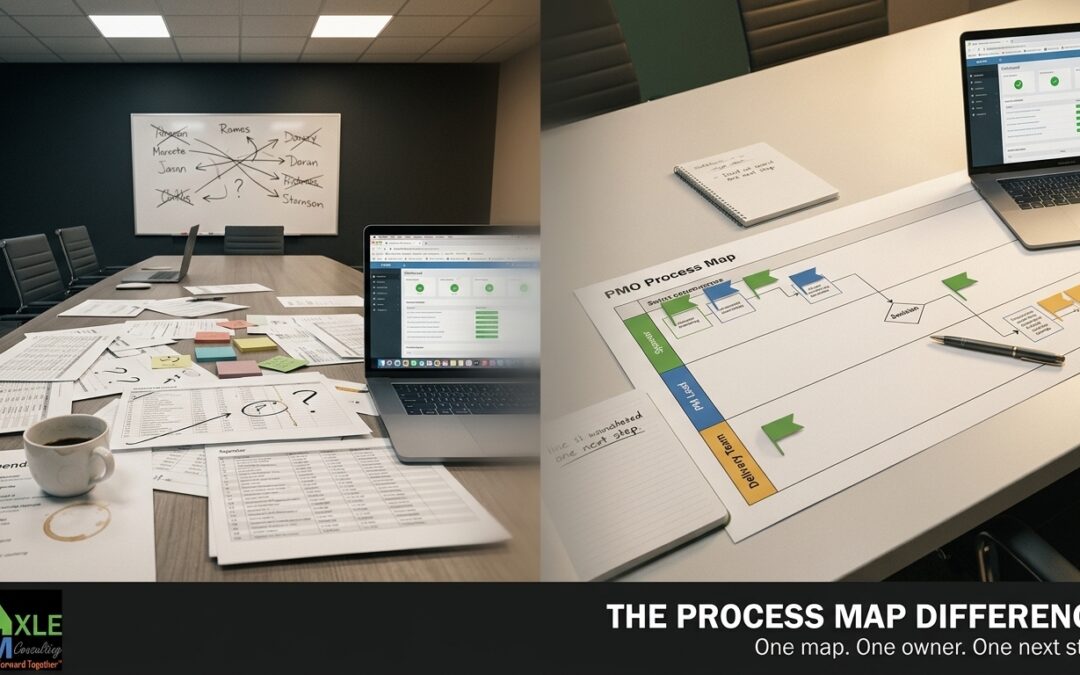
Project drift isn’t about working harder; it’s about missing clarity where it counts. When ownership, sequence, and decision points aren’t clear, teams lose direction and projects stall. A well-crafted process map brings everything into focus, giving your team one current view with clear owners and next steps. This simple shift turns scattered updates into steady progress and keeps your projects moving forward with less rework.
Read more about process mapping for deeper insights.
The Strain of Unclear Handoffs
When handoffs between team members aren’t clear, projects start to drift. This drift happens when there’s a lack of clarity over who owns what and when. Let’s dive deeper into how this affects your projects.
The Impact of Project Drift
Project drift can sneak up on any team. It starts small: a missed deadline or an unclear task. But soon, these small issues compound. Teams spend more time fixing errors instead of moving forward. The process map is key here. Without it, you might find your team revisiting the same issues repeatedly.
Another problem is wasted resources. When projects drift, time and money go down the drain. For example, a team without a clear workflow mapping strategy might spend weeks on a task that should take days. Most teams think they’re saving time by skipping planning, but the opposite is true.
Recognizing Ownership and Accountability Gaps
Who does what? It’s a simple question, but without clear answers, projects falter. Ownership gaps occur when tasks aren’t assigned properly. This leads to confusion and dropped responsibilities.
Accountability is just as crucial. If no one checks in on progress, tasks linger. For instance, if a team member isn’t aware of their role, they might assume someone else is handling it. This assumption can lead to project delay or failure.
The Role of Decision Points in Drift
Every project has key moments where decisions shape the outcome. Missing these can cause drift. Decision points need clarity and timing. If they’re unclear, teams make assumptions that lead to errors.
When decision points are mapped out, teams can act confidently. This prevents the “I thought you were handling that” scenario. In fact, mapping decision points can prevent up to 20% of project rework.
The Power of Process Maps
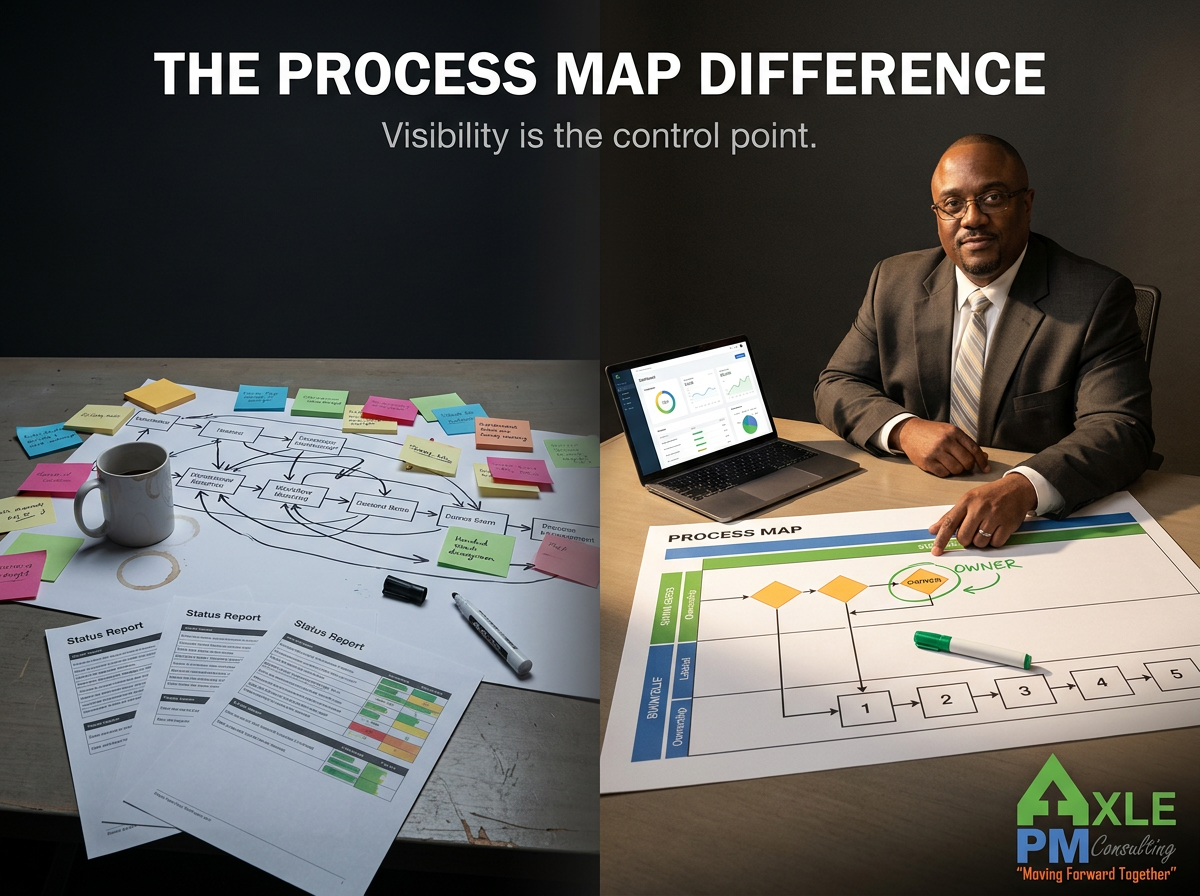
Clarity is crucial, and it’s the reason process maps are game-changers. They offer a clear path forward, making sure every team member knows their role and next steps.
Workflow Mapping for Clarity
Creating a workflow map is like giving your team a GPS for the project. It shows where you are and where you’re headed. This clarity reduces confusion and increases efficiency.
With a workflow map, everyone sees the project’s path. This transparency fosters trust and accountability. When teams see the steps in front of them, they work more efficiently, reducing errors and rework.
Enhancing Project Visibility and Control
Visibility means knowing what’s happening at every stage. A process map offers this, ensuring nothing is overlooked.
Control is the next benefit. When teams understand their tasks, they’re in control. A project dashboard adds another layer here. It provides real-time updates, helping teams stay on track. For small businesses and nonprofits, this kind of visibility is vital.
Aligning Teams with a Virtual PMO
A virtual PMO offers the structure many teams lack. It centralizes processes, making sure everyone is on the same page. This alignment turns confusion into coordinated action.
By using a virtual PMO, teams gain access to expert guidance without the overhead. They can leverage tools and templates that make project management smoother. If you’re curious about PMO structures, check out this guide.
Achieving Operational Excellence
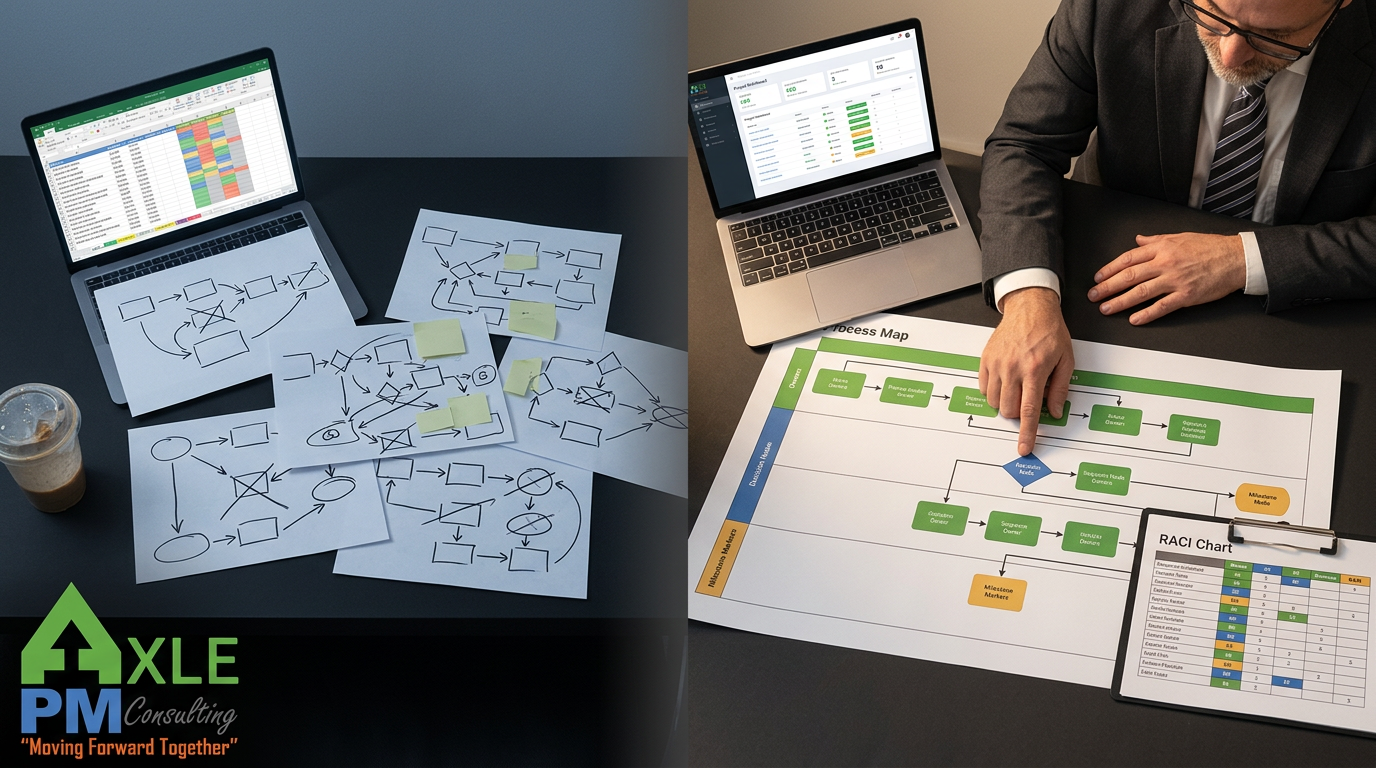
With clear processes, your team can shift focus from fixing errors to achieving excellence in operations. This shift reduces rework and streamlines tasks.
Reducing Rework Through Project Governance
Project governance is about setting rules and sticking to them. When teams follow a clear governance structure, mistakes reduce. This means less rework and more progress.
Using a RACI matrix is an effective way to define roles. It outlines who is responsible, accountable, consulted, and informed. This clarity prevents task duplication and oversight.
Utilizing the RACI Matrix for Success
The RACI matrix is simple yet powerful. It ensures everyone knows their role and responsibilities. By mapping out these roles, teams avoid common pitfalls like duplicated work or missed tasks.
Implementing a RACI matrix is straightforward. List your tasks, assign roles, and review regularly. This proactive approach keeps your project on track and your team aligned.
Leveraging Project Dashboards for Small Business and Nonprofit Management
Project dashboards are not just for big corporations. Small businesses and nonprofits benefit greatly from them. They offer a snapshot of the project’s health, allowing teams to adjust strategies quickly.
With a dashboard, you get real-time insights into progress. This visibility means you can act fast if issues arise. For nonprofits, this means maximizing limited resources effectively.
In conclusion, using a process map not only prevents drift but aligns teams for success. By embracing tools like virtual PMOs and RACI matrices, you can transform your project management approach. This transformation turns visibility into action and aligns your team for optimal results.